


7 Best Performance Review Software Tools for 2026: Features, Use Cases and How to Choose
This article is for HR teams, recruiters, and hiring managers who want to understand 7 Best Performance Review Software Tools for 2026: Features, Use Cases and How to Choose and apply it to skills-based hiring.
Published: September 25, 2026
Last updated: September 25, 2026
Key Takeaways
- Outdated Review Models Waste Time: Traditional annual performance reviews are often ineffective, with studies showing low employee inspiration and significant time spent on rating discussions rather than actual improvement. Many companies are dissatisfied with their current processes.
- Outdated Review Models Waste Time: Traditional annual performance reviews are often ineffective, with studies showing low employee inspiration and significant time spent on rating discussions rather than actual improvement. Many companies are dissatisfied with their current processes.
- Match Software to Your Needs: The choice between performance review and performance management software depends on company size and process maturity. Smaller teams may need basic review tools, while larger organizations benefit from comprehensive systems that integrate goals, 1:1s, and engagement.
- Consider Setup Effort and Flexibility: During testing, setup effort varied significantly; template-driven tools launched quickly, while highly configurable products took much longer. Unused flexibility can lead to unnecessary administrative burden and cost.
- Good Software Enables Better Feedback: Software alone cannot fix a broken process, but the right tool makes frequent, lightweight feedback practical. This shift from annual appraisals to ongoing check-ins has been adopted by major companies like Deloitte and Adobe.

Performance review software is a digital platform that manages employee evaluations, including review cycles, self-assessments, peer feedback, ratings and reports, in one place. According to Gallup, only 14% of employees strongly agree that their reviews inspire them to improve. Most companies are spending hours on a process that rarely changes behavior.
This guide is written for HR managers and people-ops leads at companies with 50 to 1,000 employees. Use it when you are replacing spreadsheet-based reviews, when your current tool no longer fits your process, or when you need a vendor shortlist before booking demos.
Our team tested 7 platforms over 4 weeks, and each one solves a different problem.
The shortlist:
TestnHire: skills and competency assessment
Lattice: all-in-one people development
15Five: continuous check-ins and coaching
Culture Amp: performance paired with engagement analytics
Leapsome: reviews, goals and learning in one suite
PerformYard: flexible, structured review cycles
Betterworks: enterprise goal alignment
How We Evaluated These Tools
Our team spent 4 weeks, from August 18 to September 15, 2026, testing each platform. We read vendor documentation, used demo and trial accounts, and scored every product against 12 criteria. The criteria included review workflows, 360-degree feedback, goal tracking, reporting depth and HRIS integrations.
In every tool that allowed it, we built the same test cycle: a 15-question manager review, a 10-question self-assessment and 3 peer reviewers per employee. We ran this cycle for 5 test employees in each system.
The result: setup effort varied far more than feature lists suggested. Template-driven tools let us launch the test cycle in under 60 minutes. Highly configurable products took 4 hours, because every form, rating scale and approval step had to be defined first. After 4 weeks of hands-on use, we found that flexibility you never use becomes admin work you still pay for.
What Is Performance Review Software?
Performance review software is a digital system that runs employee evaluations from start to finish. It schedules appraisal cycles, gathers self, manager and peer input, stores ratings and produces reports. Companies adopt it because manual reviews scatter information across documents, which makes trends invisible and calibration slow.
Why the annual review model is breaking down
Deloitte, one of the world's largest professional services firms, took a hard look at its own review process in 2015. The company counted the time spent setting goals and rating its 65,000-plus employees, and found the process used close to 2 million hours a year. According to Deloitte's findings, published in Harvard Business Review, most of those hours went into rating discussions between leaders rather than helping people improve. Deloitte then redesigned its system around frequent check-ins instead of one annual rating.
Other companies have seen the same problem. According to Gartner research, 95% of managers are dissatisfied with how their organizations conduct performance reviews. As reported by Harvard Business Review, Adobe dropped annual appraisals in 2012 and replaced them with ongoing "Check-in" conversations.
The lesson is clear. Software alone does not fix a broken process, but good software makes frequent, lightweight feedback practical.
Performance review software vs. performance management software
Review software concentrates on formal evaluations: self-reviews, manager ratings, peer input and cycle scheduling. Performance management software wraps those appraisals inside a wider system that also covers goals, one-on-ones, development plans and analytics. Many of these platforms also track employee engagement through regular surveys, because how people feel about their work often explains why their performance rises or falls.
A 60-person company escaping spreadsheets usually needs only the first. A 700-person company pursuing continuous feedback needs the second.
The 7 Best Performance Review Software Tools
1. TestnHire
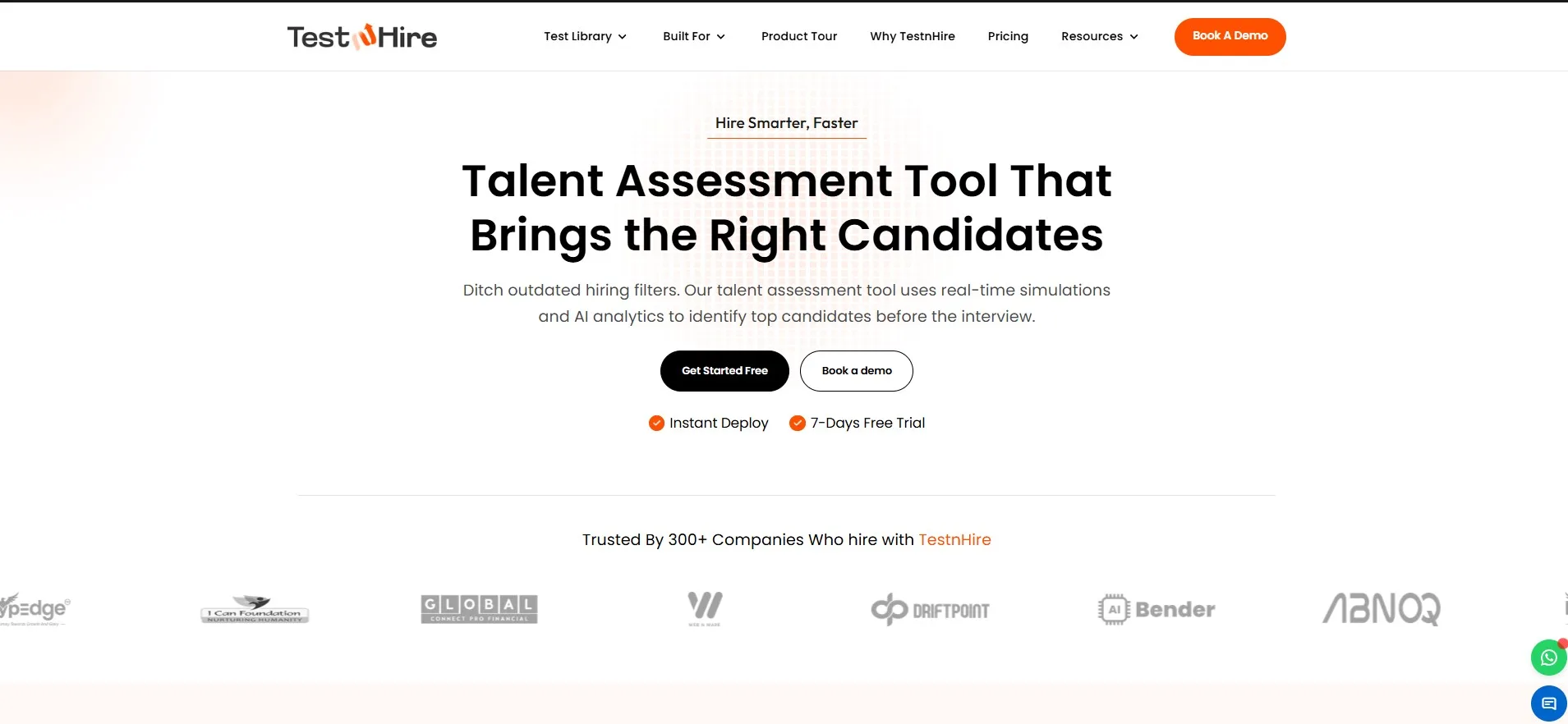
TestnHire takes a skills-first approach. It was built for candidate assessment, but its test library and scoring reports also give employers objective data on existing staff competencies.
The library holds more than 400 expert-built tests covering programming, cognitive ability, languages, software proficiency, role-specific knowledge and situational judgment. Custom assessments can be created for any position. Reports break results down by section, skill and difficulty level.
Customer example: One of our customers, a 40-person customer-support team, used TestnHire for 6 weeks alongside their regular reviews. Building a custom 25-question assessment took 20 minutes, and each agent completed it in about 30 minutes.
The result: the report flagged written-communication gaps in 9 agents whose manager reviews had rated them "meets expectations." After a 3-week targeted training module, their average assessment score rose from 58% to 76%. The gap had existed because manager ratings reflected attitude and attendance, while the assessment measured the actual skill.
Best for: organizations that want measurable competency data to sit alongside manager opinion.
Key capabilities: 400+ tests, custom assessments, technical and behavioral evaluation, situational judgment tests, skill-level analytics, benchmarking, proctoring and real-time tracking.
2. Lattice
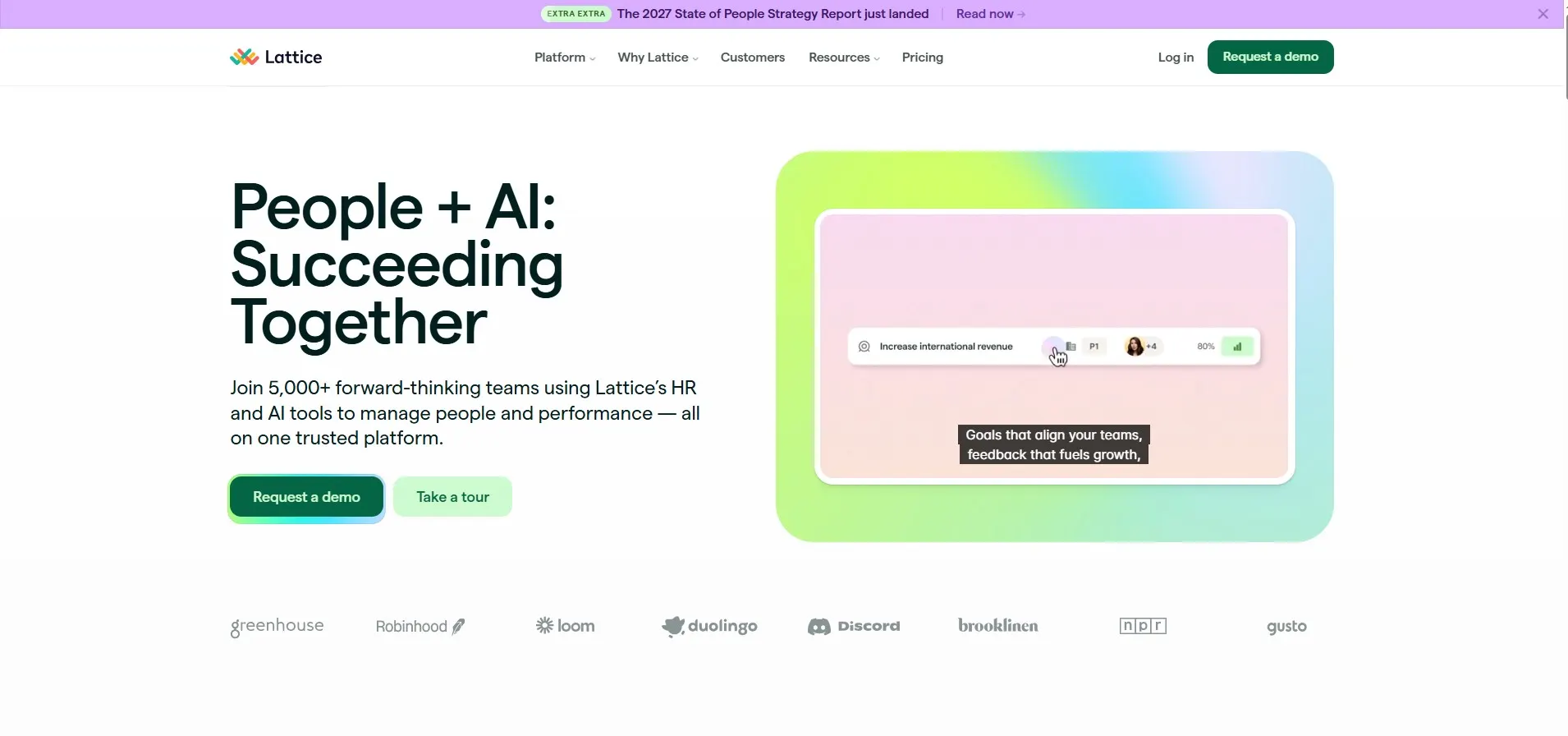
Lattice bundles reviews with goals, feedback, one-on-ones, engagement surveys and career tracks. Its strength is breadth. Managers handle most people conversations inside one interface, so fewer updates get lost between tools.
Best for: growing companies that want a single hub for employee development.
Watch for: paying for modules you will not adopt. Map your must-have workflows before signing.
3. 15Five
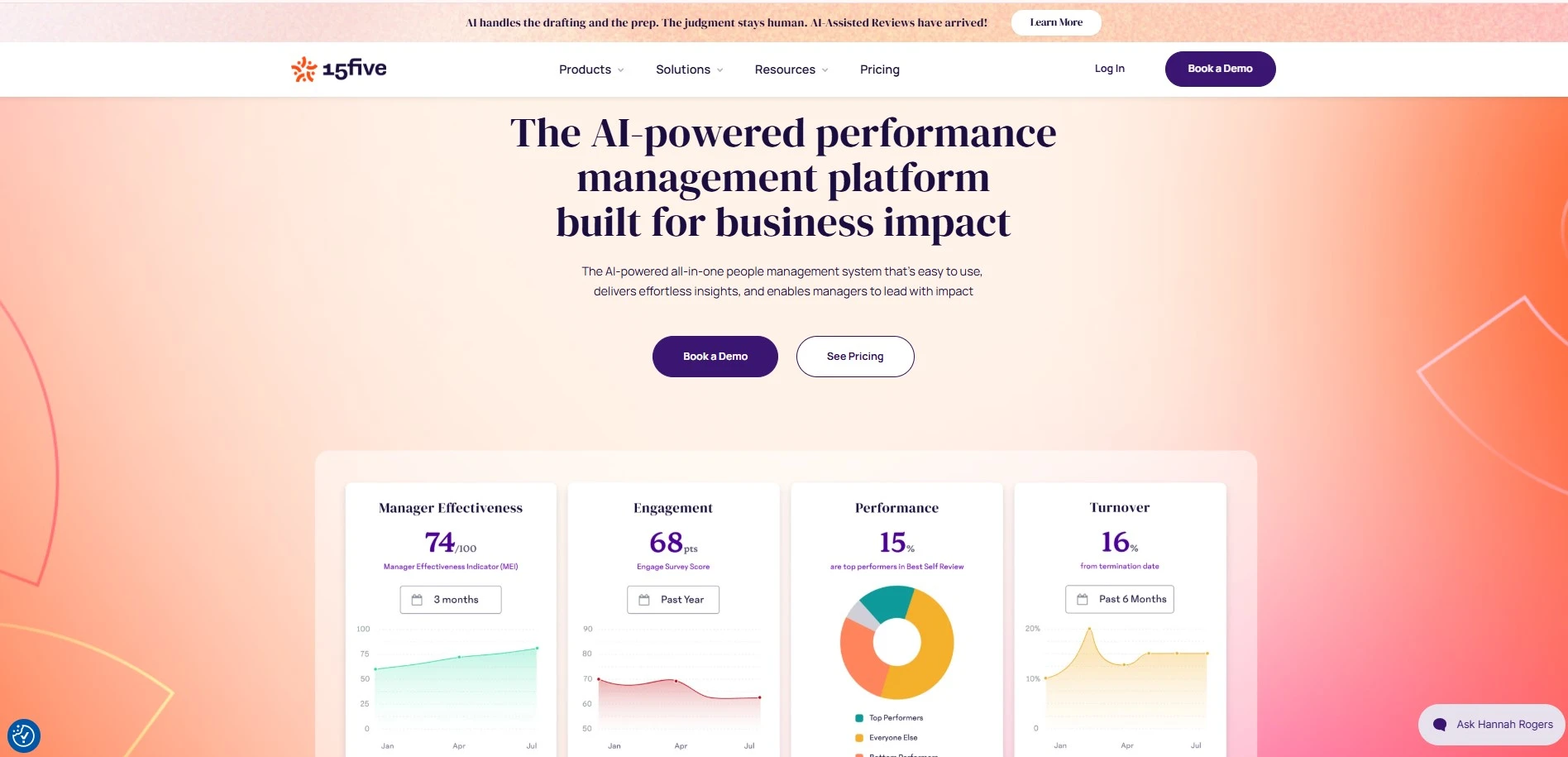
15Five is built around weekly check-ins, manager coaching and continuous feedback, with formal reviews layered on top. Frequent check-ins surface problems early, so the formal appraisal contains fewer surprises for either side.
Best for: teams moving away from once-a-year appraisals toward regular coaching.
4. Culture Amp
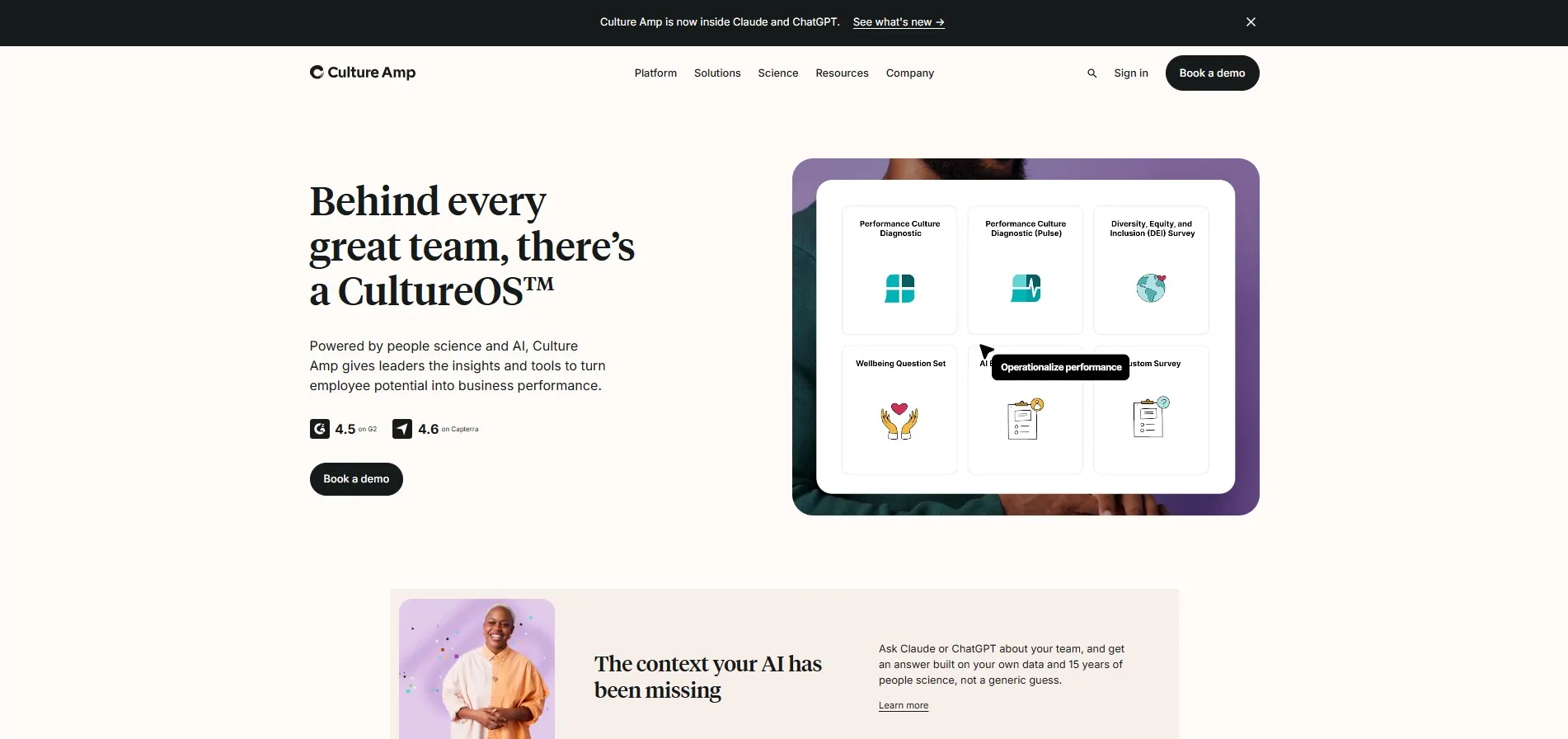
Culture Amp grew out of engagement surveys and later added performance modules. HR teams can therefore compare review outcomes with engagement scores and spot patterns, such as a department where ratings are high but morale is falling.
Best for: organizations where employee experience data drives people strategy.
5. Leapsome
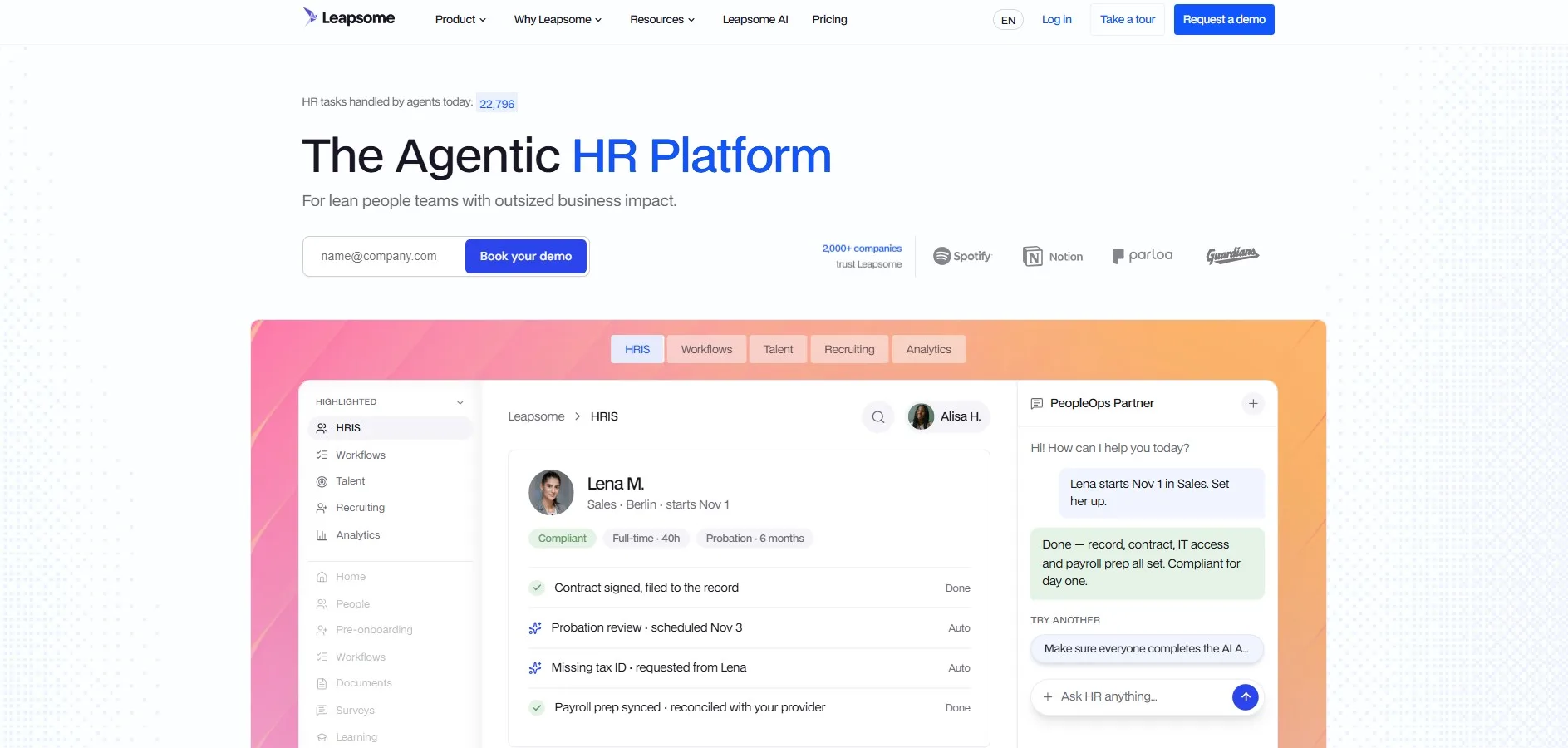
Leapsome combines reviews, OKRs, feedback, learning paths and engagement. Its main advantage is continuity: a skill gap identified during an evaluation can link directly to a learning module and a follow-up goal.
Best for: companies that want evaluation and development tightly connected.
6. PerformYard
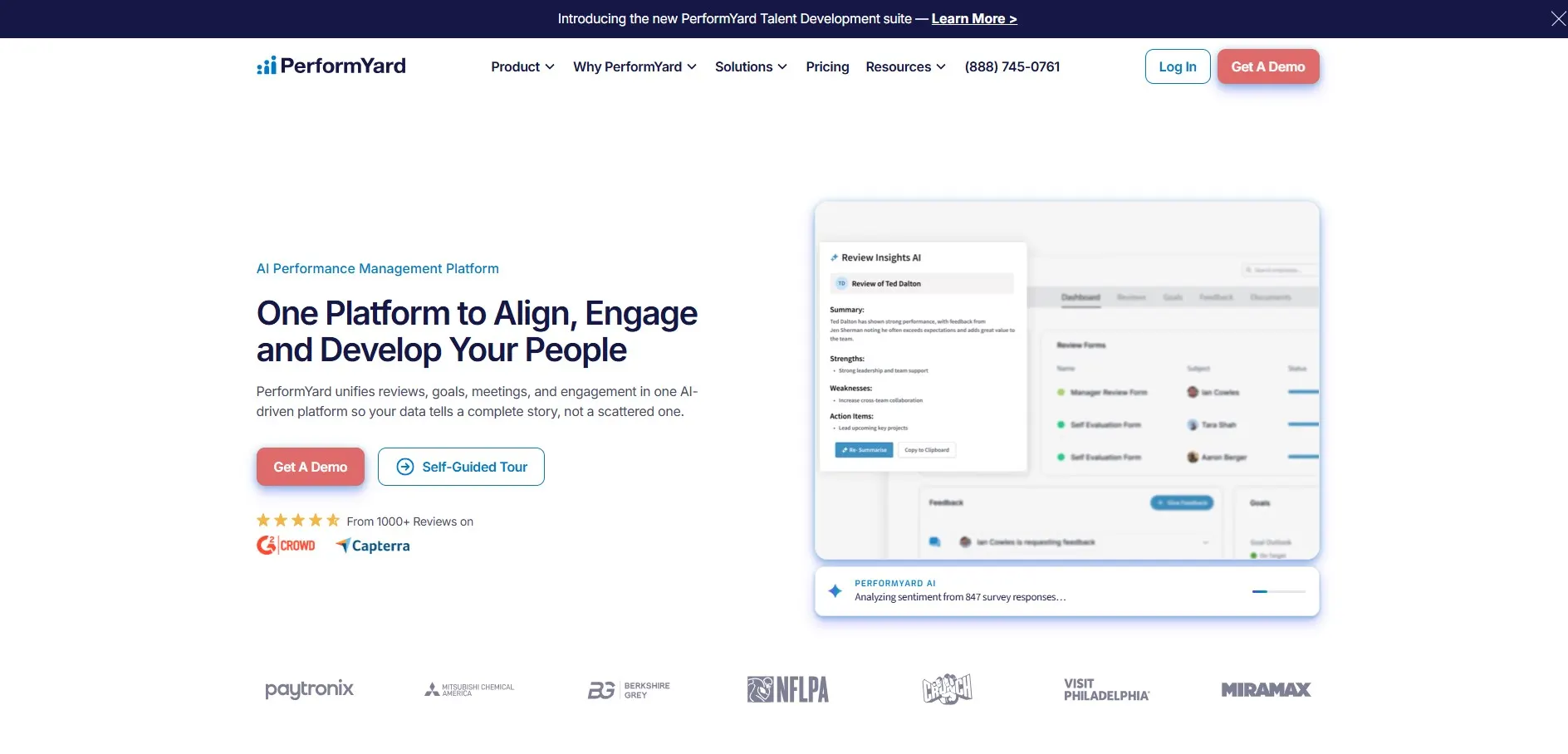
PerformYard concentrates on structured review cycles, calibration and goal tracking, with heavy configuration options. HR teams with established, multi-stage processes can reproduce them faithfully instead of bending them to fit a rigid template.
Best for: mid-sized HR teams with a defined process that needs better workflow and documentation.
7. Betterworks
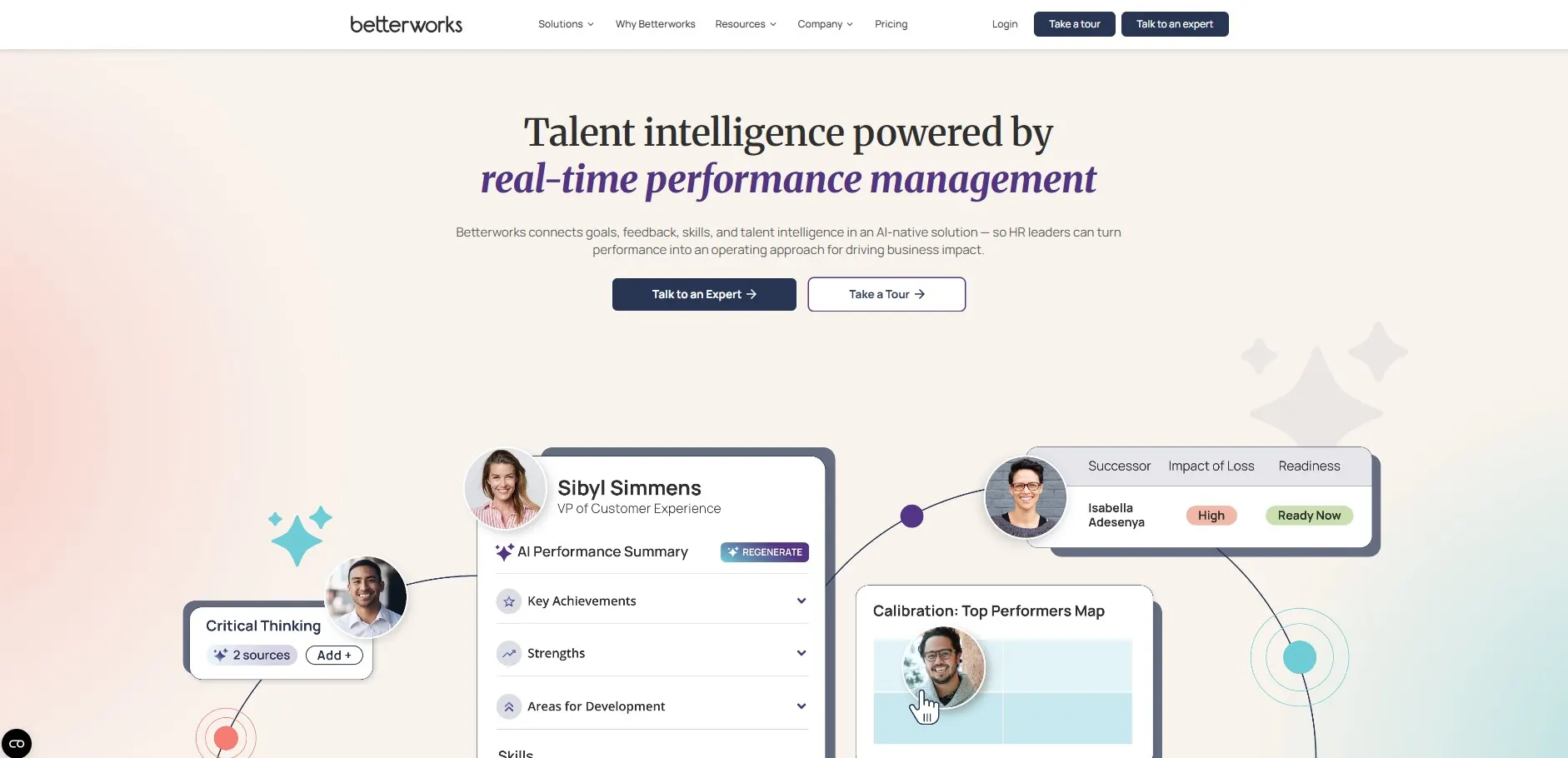
Betterworks focuses on enterprise goal alignment. It links individual objectives to department and company priorities, alongside ongoing conversations and reviews. Large organizations benefit most, because visibility across thousands of goals is hard to achieve any other way.
Best for: enterprises where cascading goals across departments is the central challenge.
Watch for: integration and governance requirements. Involve IT early.
Performance Review Software Comparison
This table compares product focus. It is not a ranking, because the right choice depends entirely on the problem you are solving.
How to Choose Performance Review Software
Start with your current process, not vendor feature pages. Answer these questions first.
1. What exactly are you measuring?
If competency matters most, prioritize assessment and reporting depth. If goal delivery matters most, examine goal tracking and progress updates. If behavior change is the aim, favor frequent check-ins and coaching prompts.
2. Do you need 360-degree feedback?
Check how each tool handles self, peer, direct-report and manager input, whether anonymity is supported, and how comments are summarized. Poor summaries bury useful insights, which defeats the purpose of collecting them.
3. How much customization do you need?
List your non-negotiables: department-specific forms, competency frameworks, rating scales, approval stages and custom reports. Pick a product that supports your process, so HR does not have to redesign everything around the software.
4. Will it connect to your existing systems?
Confirm integrations with your HRIS, ATS, payroll and collaboration apps. Without them, employee data gets entered twice, and duplicate records drift out of sync within months.
5. Will managers actually use it?
Adoption decides success. According to Gallup, managers account for at least 70% of the variance in team engagement. A tool that frustrates managers will fail no matter how strong its reporting is.
Why Skills-Based Performance Reviews Matter
Asking "did this employee hit their goals?" tells only half the story. Goals show outcomes, while skills explain why those outcomes happened and whether they will repeat.
A skills-aware appraisal answers practical questions:
Which competencies does this person demonstrate reliably?
Where are the gaps, and what training would close them?
Have expectations for the role been defined clearly?
How has capability changed since the last cycle?
Pairing structured assessments with manager feedback reduces rating bias, because opinions get checked against measurable evidence.
Final Thoughts
No single performance review software fits every organization. TestnHire stands out when skills assessment and objective evaluation are central to your talent strategy. Lattice, 15Five, Culture Amp, Leapsome, PerformYard and Betterworks each approach performance management differently, with distinct strengths in goals, coaching, engagement, development, calibration and alignment.
Define your review process first. Then test shortlisted products against the workflows your managers will use every week.
The goal is not simply moving appraisals out of spreadsheets. It is giving managers better information, giving employees clearer feedback, and giving HR a reliable picture of capability across the business.

About the Author
Ashish Jain
I’m a Full Stack Developer and the founder of TestnHire, with over 10+ years of experience in web development, technology, talent assessment, and hiring solutions. My focus is on helping businesses make faster, smarter, and more data-driven hiring decisions by leveraging technology, skill-based assessments, and AI-powered recruitment solutions. Through this blog, I share practical insights, hiring strategies, assessment best practices, and real-world expertise to help employers identify the right talent, streamline recruitment, and build stronger teams.


Recent Posts
Share


Frequently asked questions
What is the best performance review software?
It depends on your goal. TestnHire suits skills-focused evaluation. Lattice and Leapsome suit all-in-one development. 15Five fits coaching cultures, Culture Amp links appraisals with engagement, PerformYard handles structured cycles, and Betterworks serves enterprise goal alignment. Define your process before comparing vendors.
What is the difference between performance review and performance management software?
Performance review software handles formal evaluations: self-reviews, manager ratings, peer input and cycle scheduling. Performance management software includes those reviews plus goals, one-on-ones, development plans, engagement and analytics. Smaller firms often need only the first. Larger ones usually benefit from the broader suite.
Can performance review software track employee goals?
Yes. Most modern tools let employees and managers set goals, log progress and discuss results during reviews. Connecting goals to appraisals gives feedback concrete context, because the conversation centers on measurable outcomes rather than impressions.
What is 360-degree performance review software?
It collects input from several directions: managers, peers, direct reports and the employee's own self-assessment. This wider view reduces single-rater bias, which makes the final evaluation more balanced than a manager-only appraisal.
How often should employees receive performance reviews?
Many organizations now run a formal review once or twice a year, supported by monthly or weekly check-ins. Frequent conversations catch issues early, so formal appraisals become summaries rather than surprises.
Can skills assessments be used with performance reviews?
Yes. Role-relevant assessments add objective competency data to manager opinion. They work best when the tested skills match the job's real demands, because irrelevant tests produce scores that nobody trusts or acts on.


